
The 2019 model year brought renewed competition between two of the most iconic luxury SUV coupés on the market: the BMW X6 and the Mercedes GLE 350 d Coupé. Both vehicles promise a blend of performance, comfort, and cutting-edge technology, appealing to buyers who seek a commanding road presence without sacrificing refinement. With their distinctive styling and premium credentials, these SUVs cater to those who value both aesthetic appeal and practical functionality in their daily driving experience.
Infotainment systems compared: bmw idrive versus mercedes mbux
In the realm of in-car technology, both manufacturers have invested significantly in developing systems that enhance the driving experience through intuitive controls and seamless connectivity. The BMW X6 features the iDrive system, which is displayed on a 10.2-inch touchscreen and paired with a 10-speaker audio setup. This interface has been praised for its user-friendly design and responsiveness, enabling drivers to navigate menus with minimal distraction. The system integrates navigation, audio controls, and vehicle settings in a centralised hub, offering a cohesive and straightforward approach to digital interaction. Its logical layout ensures that even those unfamiliar with the system can quickly adapt, making it a strong contender in terms of usability.
BMW iDrive Interface: Functionality and User Experience
The iDrive system in the BMW X6 has evolved over several generations to become one of the more refined infotainment platforms available. The touchscreen interface is complemented by a rotary controller located between the seats, which allows for tactile input without needing to reach forward. This dual-input method strikes a balance between modern touchscreen expectations and traditional, ergonomic control. Additionally, the system supports wireless charging and hands-free tailgate operation, features that add a layer of convenience for everyday use. The heads-up display option further enhances safety by projecting key information onto the windscreen, allowing drivers to keep their eyes on the road. These thoughtful touches reflect BMW's commitment to blending technology with driving dynamics.
Mercedes mbux: voice control and artificial intelligence features
Mercedes, on the other hand, equips the GLE 350 d Coupé with its MBUX system, displayed on an 8.0-inch touchscreen and supported by an 8-speaker audio configuration. While the screen size is smaller compared to the BMW, the MBUX platform is distinguished by its advanced voice control capabilities and artificial intelligence integration. The system can learn user preferences over time, adapting its suggestions and responses to match individual habits. Voice commands are processed with impressive accuracy, enabling drivers to adjust settings, navigate routes, or control media without manual input. This hands-free approach is particularly valuable in maintaining focus during journeys. The MBUX system represents Mercedes' vision of a more intuitive and conversational relationship between driver and vehicle, setting a new standard in the luxury SUV segment.
Performance and Powertrain: xDrive Dynamics Against GLE 350 d Torque
When it comes to performance, both the BMW X6 and the Mercedes GLE 350 d Coupé offer compelling arguments, albeit with different philosophies underpinning their engineering. The BMW X6 xDrive35i, priced at 74,350 pounds, delivers 302 horsepower and 300 lb-ft of torque, while the Mercedes GLE 350 d 4Matic Coupé, starting at 76,338.50 euros, produces 272 horsepower and 600 Nm of torque. The disparity in torque figures highlights the Mercedes' diesel advantage, offering robust low-end power that suits effortless cruising and confident overtaking manoeuvres. Meanwhile, BMW's xDrive system is tuned to engage the driver, with electronic throttle control and launch control features that enhance responsiveness and acceleration. The X6 achieves a sprint from zero to 100 kilometres per hour in 5.5 seconds, whereas the GLE 350 d completes the same run in 6.6 seconds. This difference underscores the BMW's focus on dynamic performance, while the Mercedes prioritises smooth, sustained power delivery.
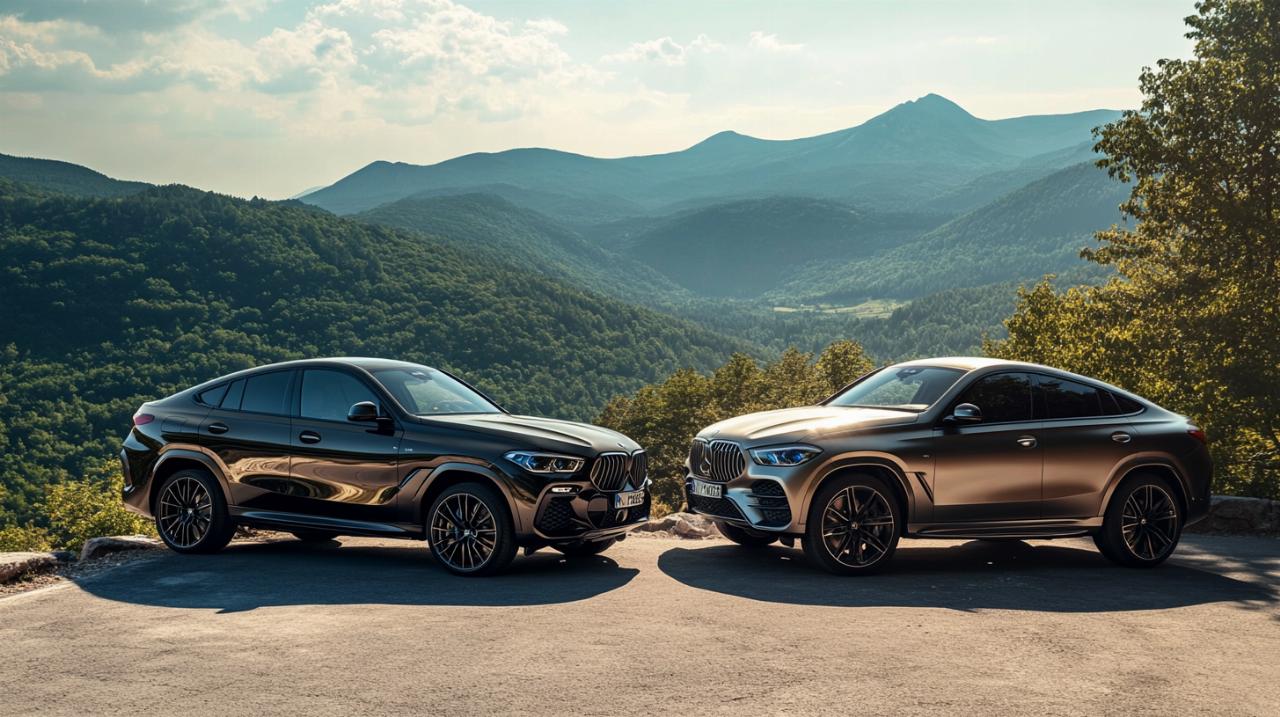
BMW X6 xDrive System: Engine Specifications and Driving Characteristics
The xDrive all-wheel-drive system in the BMW X6 is a sophisticated setup designed to distribute power intelligently between the front and rear axles. This ensures optimal traction in varying conditions, whether navigating wet roads or tackling winding country lanes. The vehicle's suspension is tuned for a more engaging driving experience, allowing the X6 to feel agile despite its substantial weight of over 2,134 kilograms. The sharp lines and aggressive styling of the X6 are mirrored in its handling characteristics, with the car responding keenly to steering inputs. The electronic systems, including launch control, enable spirited acceleration, making the X6 a compelling choice for those who enjoy a more performance-oriented approach to SUV ownership. Fuel efficiency stands at 11.6 litres per 100 kilometres combined, which is competitive given the vehicle's size and power output.
Mercedes GLE 350 d Coupe: Diesel Efficiency and Power Delivery
In contrast, the Mercedes GLE 350 d Coupé employs a 3.0-litre diesel engine that emphasises efficiency and refinement. With a torque output of 600 Nm, the diesel powertrain offers effortless acceleration and smooth power delivery, particularly at lower revs. This characteristic makes the GLE 350 d especially suited to long-distance motorway cruising, where the engine's relaxed demeanour contributes to a serene cabin environment. The 4MATIC all-wheel-drive system distributes power with a focus on stability and comfort, prioritising a composed ride over outright sportiness. The suspension setup is engineered to absorb road imperfections with grace, ensuring that passengers enjoy a plush experience even on less-than-perfect surfaces. Fuel consumption for the Mercedes is rated at 7.7 litres per 100 kilometres, reflecting the efficiency gains inherent to diesel technology. The GLE 350 d's top speed of 226 kilometres per hour and its towing capacity of 3,265 kilograms further underscore its versatility and capability.
Practicality and Luxury: Boot Space, Comfort, and Design Philosophy
Beyond performance and technology, the practicalities of daily use and the luxury of the cabin experience are critical considerations for buyers in this segment. Both the BMW X6 and the Mercedes GLE 350 d Coupé are substantial vehicles, each measuring close to five metres in length and exceeding two metres in width. The BMW X6 is 4,923 millimetres long, with a wheelbase of 2,933 millimetres and a height of 1,702 millimetres. Meanwhile, the Mercedes GLE Coupé measures 4,941 millimetres in length, 2,018 millimetres in width, and 1,730 millimetres in height. These dimensions translate into commanding road presence and generous interior space, though the coupé-inspired rooflines do impose some compromises on rear headroom and cargo capacity. The interiors of both models are finished to a high standard, featuring soft-touch materials and the latest technological conveniences, creating an environment that feels both luxurious and contemporary.
Interior space and boot volume: which suv offers more versatility?
When it comes to boot space, the Mercedes GLE 350 d Coupé holds a clear advantage. With the rear seats in place, the Mercedes offers 690 litres of cargo volume, which expands to 2,010 litres when the seats are folded down. This compares favourably to the BMW X6, which provides 550 litres with the seats up and 1,525 litres with the seats down. The difference is significant for those who regularly transport larger items or require flexibility for family outings and weekend adventures. The Mercedes' additional space makes it a more practical choice for buyers prioritising versatility alongside luxury. Both vehicles accommodate five passengers comfortably, with memory seats and navigation systems included as standard. The Mercedes also benefits from nine airbags compared to the BMW's six, reinforcing its focus on safety and occupant protection.
Styling and Comfort: Comparing the Design Language of Both Models
Design philosophy plays a pivotal role in how these vehicles are perceived and experienced. The BMW X6 adopts a more aggressive styling approach, with sharper lines and a muscular stance that conveys athleticism and intent. This design language appeals to those who value a bold, assertive presence on the road. The X6's proportions and sculpted bodywork communicate performance and dynamism, aligning with its driving characteristics. Conversely, the Mercedes GLE 350 d Coupé embraces a more elegant and refined aesthetic, with softer angles and a graceful silhouette that exudes sophistication. The Mercedes' design is less confrontational and more harmonious, appealing to buyers who prefer understated luxury. Inside, both vehicles offer a high level of comfort, with the Mercedes edging ahead in terms of ride quality thanks to its suspension tuning. The GLE Coupé's focus on comfort makes it particularly well-suited to long journeys, where the emphasis is on relaxation rather than spirited driving. Both vehicles come with comprehensive warranties covering 48 months or 80,000 kilometres, along with 48 months of unlimited-kilometre roadside assistance, providing peace of mind for owners. Ultimately, the choice between these two exceptional SUVs comes down to personal priorities, whether one values engaging dynamics and bold design or prefers refined comfort and practical versatility.